Tokenomics
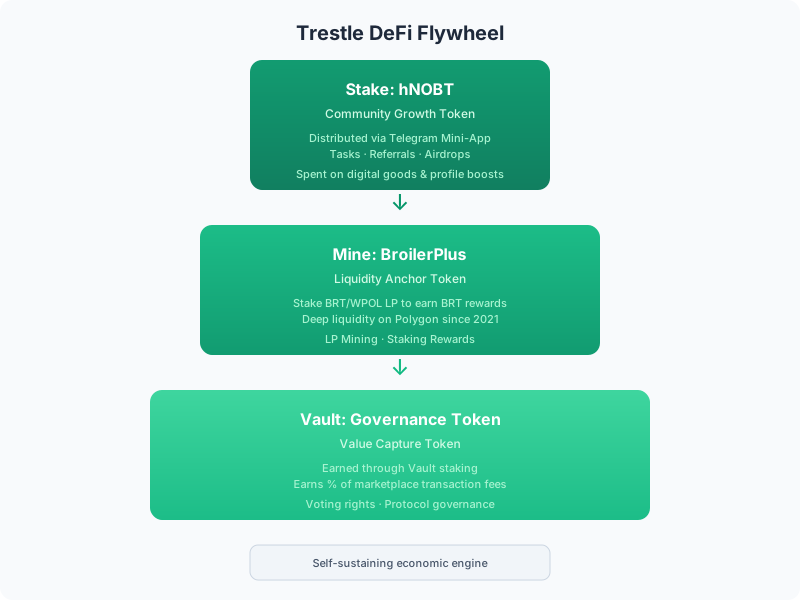
The Trestle ecosystem utilizes a three-token system designed to create a self-sustaining economic flywheel.
The Three-Token System
| Token | Symbol | Purpose | Supply Model |
|---|---|---|---|
| Community Growth | hNOBT |
Tasks, Referrals, Profile Boosts | Dynamic (No Max Supply) |
| Liquidity Anchor | BroilerPlus (BRT) |
LP Mining, Staking Rewards | Fixed (1 Quadrillion, 9 decimals) |
| Value Capture | Governance |
Fee Sharing, Voting | Fixed (1,000,000) |
BroilerPlus (BRT) Emission Model
Total Supply: 1 Quadrillion (1,000,000,000,000,000)
Mining Allocation
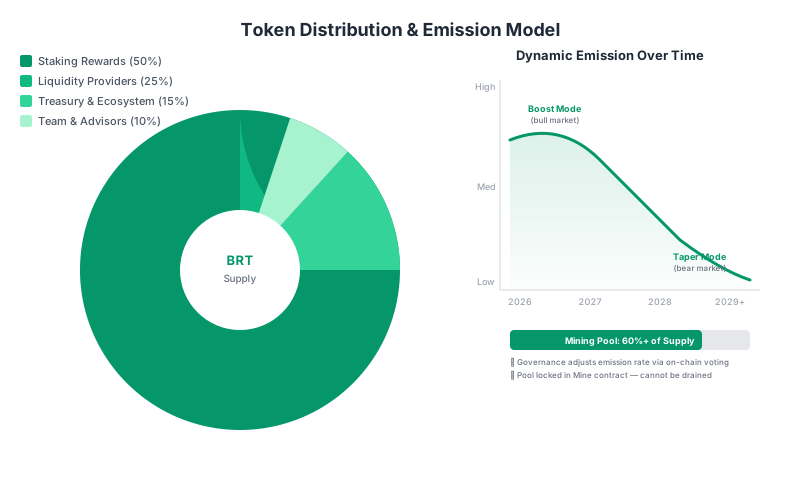
60%+ of the total supply is reserved exclusively for Liquidity Mining & Staking Rewards.
Dynamic Emissions
Unlike static protocols, Trestle uses a Governance-Driven Emission Model: - Rate Adjustment: The reward rate per block is adjustable by Governance Token Holders via on-chain voting. - Market Response: - Bear Market: Governance can lower emissions to conserve the pool. - Bull Market: Governance can increase emissions to bootstrap deep liquidity. - Sustainability: This ensures the mining pool lasts for 10+ years rather than being exhausted in months.
Distribution Breakdown
- 60%+: LP Mining & Staking Rewards (Dynamic Emissions)
- 25%: Initial Liquidity Providers (Market Making)
- 15%: Treasury & Ecosystem Growth (Governance Controlled)
Note: The Mining Pool is locked in the
Minecontract. Once exhausted, emissions stop until new allocations are approved by Governance.BRT Transfer Tax: BRT has a 5% transfer tax enforced at the token-contract level. Staking contracts gross up rewards to account for this tax, ensuring users receive the full intended amount.